Key takeaways
- Never leave a mattress on the curb without confirming pickup — illegal dumping fines commonly run from $100 to several hundred dollars.
- Seal the mattress in a disposal bag before it leaves the bedroom to stop dust, allergens, and bed bugs from spreading through your home.
- Check for retailer haul-away when ordering a new bed; timing removal with delivery saves you a separate trip or fee.
- If your mattress has bed bugs, label the bag clearly and follow local hazardous-disposal rules — donation and standard recycling are off the table.
The average mattress weighs 50 to 120 pounds and is bulky, awkward, and largely non-biodegradable — which is exactly why an estimated 15 to 20 million mattresses hit U.S. landfills every year. Getting rid of yours responsibly is not hard, but it does take a plan: most curbside trash services will not take a mattress without special arrangements, and illegal dumping carries fines that can top several hundred dollars.
The good news is you have five solid, legal options, from free municipal pickup to recycling programs that reclaim up to 90 percent of a mattress’s materials. This guide walks through each route, how to prep the mattress for transport, and how a simple disposal bag keeps the job clean and sanitary.
Our top picks


As an Amazon Associate we earn from qualifying purchases at no extra cost to you. Ratings are shown as listed on Amazon.
⚡ Save on Your Next PC — Amazon Prime
Prime members get fast free shipping on the systems above, plus early access to Prime Day & Black Friday PC deals. New members get a 30-day free trial.
Watch: How to Properly Dispose of an Old Mattress — Video Review
Donate If It Is Still Usable
If your mattress is under about 10 years old, free of stains, tears, and bed bugs, donation is the best first option. Charities such as Habitat for Humanity ReStore, the Salvation Army, and local shelters often accept clean mattresses and may even collect them. Call ahead to confirm their condition requirements — most will not take anything soiled or structurally damaged — and always seal the mattress in a disposal bag before transport to keep it sanitary.
Recycle Through a Dedicated Program
Roughly 80–90 percent of a mattress can be recycled: steel springs, foam, wood frames, and cotton are all reclaimable. States including California, Connecticut, and Rhode Island run the Bye Bye Mattress program with free drop-off sites, and many cities have independent recyclers. Search your ZIP code on the Mattress Recycling Council directory to find the nearest facility before hauling it anywhere.
Schedule Municipal or Bulk-Waste Pickup
Most cities offer bulk or large-item pickup for a small fee or on scheduled days. Contact your local waste authority to book a slot and learn their wrapping rules — many require the mattress sealed in plastic to prevent bed-bug spread. This is the simplest route when donation and recycling are not practical.
Use a Junk-Removal or Retailer Haul-Away
Junk-removal companies will collect a mattress for roughly $75–$150, doing all the lifting for you. Better yet, if you are buying a new bed, many retailers offer old-mattress haul-away at delivery for a modest fee or free with premium delivery. Arranging removal at the same time as your new mattress arrives is the most convenient option of all.
Prep and Bag the Mattress
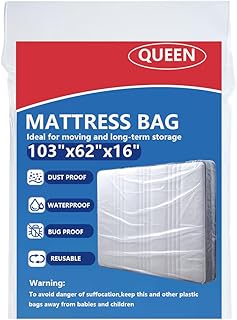
However you dispose of it, seal the mattress in a plastic disposal bag first. A queen mattress bag runs about $7–$15 and prevents debris, moisture, and any pests from spreading during the move. Products like the TICONN 2-pack or a single-queen disposal bag make wrapping quick, protect your vehicle and hallways, and are often required by recyclers and pickup services.
Tips
- Never leave a mattress on the curb without confirming pickup — illegal dumping fines commonly run from $100 to several hundred dollars.
- Seal the mattress in a disposal bag before it leaves the bedroom to stop dust, allergens, and bed bugs from spreading through your home.
- Check for retailer haul-away when ordering a new bed; timing removal with delivery saves you a separate trip or fee.
- If your mattress has bed bugs, label the bag clearly and follow local hazardous-disposal rules — donation and standard recycling are off the table.
Frequently Asked Questions
Can I put my old mattress out with the regular trash?
Almost never without arrangements. Standard curbside collection typically excludes mattresses, and setting one out uninvited can trigger illegal-dumping fines. You must schedule a bulk-item pickup, use a recycling drop-off, or arrange haul-away instead.
Is mattress recycling really worth the effort?
Yes. Up to 80–90 percent of a mattress — steel, foam, wood, and fiber — can be reclaimed and reused, keeping a bulky, slow-to-decompose item out of the landfill. Many programs are free, so the only cost is transporting it to a drop-off point.
How much does it cost to dispose of a mattress?
It ranges from free to about $150. Donation and many recycling programs are free; municipal bulk pickup is often a small fee; junk-removal services charge roughly $75–$150; and retailer haul-away is typically $25–$50 or free with premium delivery.
Do I need to wrap the mattress before disposal?
In most cases yes. Recyclers and pickup services frequently require a sealed plastic bag to contain debris and prevent bed-bug spread. Even when it is not required, a $7–$15 disposal bag keeps your car, hallways, and the disposal site clean.
Conclusion
Responsible mattress disposal is really a matter of matching the method to the mattress’s condition: donate it if it is clean and usable, recycle it to reclaim the vast majority of its materials, or book bulk pickup or haul-away when convenience wins. Whatever you choose, bag it first to keep the process clean and compliant. A little planning turns a bulky, fine-worthy headache into a quick, eco-friendly errand.